Getting a clear picture of building exterior siding installation cost 2026 means breaking down material prices, labor rates, and regional influences right from the start; most owners discover that the total expense can range from $7 to $25 per square foot depending on the chosen siding type and local market conditions. Understanding these variables helps you budget accurately and avoid surprise overruns, especially when projects involve high‑rise structures or climates with extreme humidity. For a deeper dive into material selection for humid environments, see our guide on weatherproof siding material for high humidity Hong Kong 2026.
Understanding the Components of Siding Installation Cost in 2026
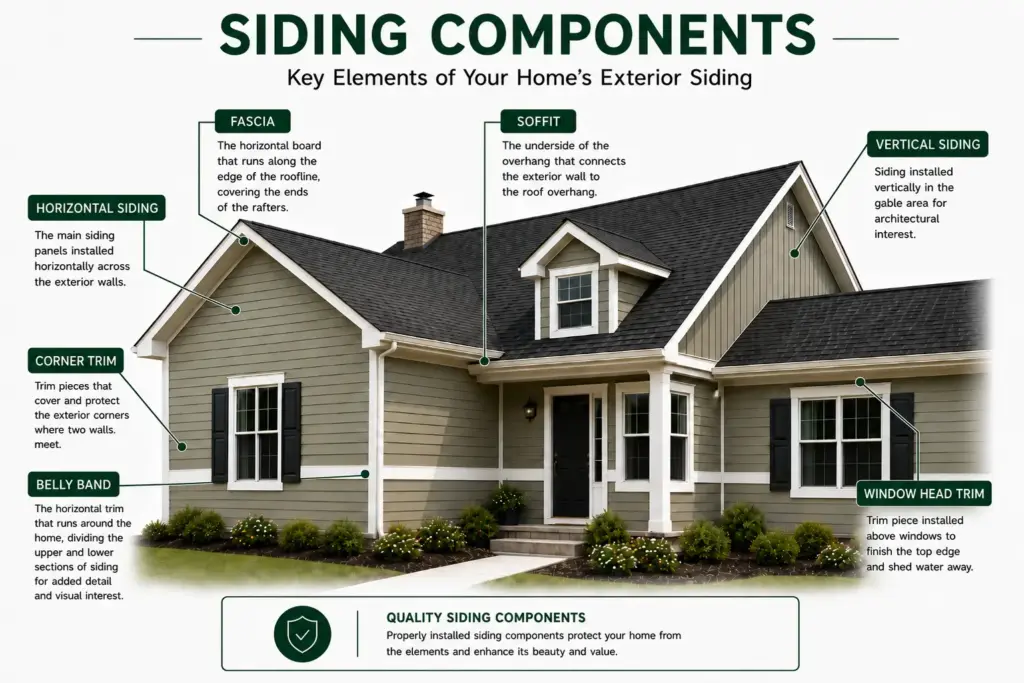
In 2026 the total cost of exterior siding is no longer a single line item. It reflects a blend of three core components:
- Material cost per square foot – influenced by the type of siding, thickness, and any special coatings.
- Labor and installation fees – driven by local wage standards, project complexity, and the need for specialized tools.
- Ancillary expenses – permits, insulation upgrades, weather‑resistant barriers, and waste disposal.
These elements interact differently across regions. For example, the Hong Kong Construction Industry Council reported that labor rates for skilled cladding installers averaged HK$480 per hour in 2026, while in Kuala Lumpur the same work cost roughly MYR 45 per hour (Construction Labour Survey 2026, Ministry of Works).
Table of Contents
- Understanding the Components of Siding Installation Cost in 2026
- Material Costs: From Vinyl to Composite
- Labor Rates and Regional Variations
- Comparative Cost Analysis Across Common Siding Types
- Factors That Can Inflate or Reduce Your Budget
- Energy‑Efficient and Weather‑Resistant Options
- Project Scale, Accessibility, and Permits
- Real‑World Case Study: A Mid‑Rise Office Building in Hong Kong
- Step‑by‑Step Guide to Estimating Your Siding Project
- Common Mistakes to Avoid
- FAQ – Building Exterior Siding Installation Cost 2026
- What is the average cost per square foot for residential siding in 2026?
- Do energy‑efficient siding options increase overall project cost?
- How do I choose between fiber‑cement and composite siding?
- Can I install siding myself to save money?
- Are there government incentives for using sustainable siding?
- Future Outlook: What to Expect in 2027 and Beyond
Material Costs: From Vinyl to Composite
Vinyl siding remains the most economical option, with a base price of US $4–$7 per square foot for standard thickness. However, premium grades featuring UV‑stabilizers and impact‑resistant cores now command US $9–$12, reflecting advances in polymer technology.
Fiber‑cement panels, praised for fire resistance, average US $10–$14 per square foot. Meanwhile, composite siding—often a blend of wood fibers and recycled polymers—has surged to US $12–$18 per square foot due to sustainability certifications and longer warranty periods (Composite Materials Association 2026).
Labor Rates and Regional Variations
Installation labor is heavily impacted by local construction codes and the availability of skilled workers. In 2026, the average installation labor cost in Hong Kong was HK$650–HK$820 per square meter, whereas in Malaysia it ranged from MYR 30–MYR 55 per square foot. The disparity stems from differing minimum wage policies and the prevalence of prefabricated panel systems that reduce on‑site labor time.
Comparative Cost Analysis Across Common Siding Types
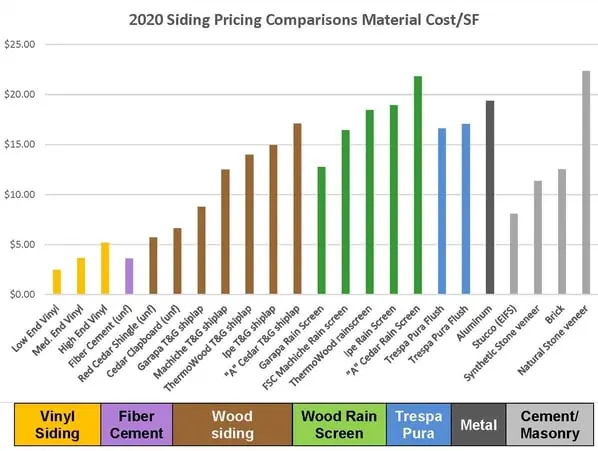
The table below consolidates 2026 price points for the most popular exterior wall cladding options, combining material and average installation costs. All figures are expressed in U.S. dollars per square foot and assume a typical residential building with standard wall preparation.
| Siding Type | Material Cost | Installation Cost | Total Avg. Cost (2026) |
|---|---|---|---|
| Vinyl | $4–$7 | $2–$4 | $6–$11 |
| Fiber‑Cement | $10–$14 | $3–$5 | $13–$19 |
| Aluminum Cladding | $12–$16 | $4–$6 | $16–$22 |
| Composite (Wood‑Plastic) | $12–$18 | $4–$7 | $16–$25 |
| Metal Panels (Steel) | $14–$20 | $5–$8 | $19–$28 |
These numbers illustrate why many developers opt for aluminum cladding despite its higher upfront price; the material’s durability and low maintenance offset lifecycle costs, a point detailed in our Aluminum Cladding Exterior Wall Hong Kong Price 2026 guide.
Factors That Can Inflate or Reduce Your Budget
Energy‑Efficient and Weather‑Resistant Options
Investing in energy‑efficient siding—such as insulated vinyl or insulated metal panels—adds roughly $1–$3 per square foot to material costs, but can cut heating and cooling bills by 10‑15% according to the Hong Kong Energy Efficiency Office (2026). In high‑humidity zones, a waterproof barrier (e.g., a self‑adhered membrane) is mandatory and typically costs $0.50–$1.20 per square foot.
Project Scale, Accessibility, and Permits
Large‑scale projects benefit from economies of scale; a 10,000‑sq‑ft façade may see a 5‑10% discount on both material and labor. Conversely, difficult access—tight alleyways, high-rise scaffolding, or historic preservation constraints—can increase labor hours by 20‑30%.
Permitting fees differ widely. In Hong Kong, the Building Authority levies a standard siding permit fee of HK$2,500, while in Malaysia the equivalent charge averages MYR 1,200 (Building Regulation Gazette 2026).
Real‑World Case Study: A Mid‑Rise Office Building in Hong Kong
In early 2026, a 12‑story office tower in Central, Hong Kong, underwent a façade refresh using a metal cladding system. The project team selected a high‑performance aluminum panel for its lightweight nature and corrosion resistance. Below is a concise cost breakdown:
- Material (aluminum panels, finished): US $15 per sq ft
- Installation labor (including scaffolding): US $6 per sq ft
- Waterproofing membrane and flashings: US $1.2 per sq ft
- Permit and engineering fees: US $0.8 per sq ft
The total came to US $22.9 per sq ft**, roughly 15% higher than the average for comparable projects, mainly due to the premium finish and the need for a Metal Cladding System Supplier Hong Kong Industrial 2026 that met stringent fire‑safety standards.
Step‑by‑Step Guide to Estimating Your Siding Project
- Measure the façade area. Use laser distance meters or architectural drawings; remember to subtract window and door openings.
- Select your siding material. Compare durability, warranty, and energy‑efficiency ratings. For humid climates, refer to our Weatherproof Siding Material for High Humidity Hong Kong 2026 article.
- Calculate material cost. Multiply square footage by the per‑sq‑ft price of your chosen material.
- Add labor. Apply the regional labor rate (e.g., HK$650–HK$820 per sqm) and factor in a 10‑15% contingency for scaffolding or special access.
- Include ancillary expenses. Permit fees, insulation, vapor barriers, and waste disposal typically add 5‑10% of the subtotal.
- Apply a contingency buffer. Industry best practice recommends a 10% contingency for unexpected site conditions.
- Review the final estimate. Ensure the total aligns with your budget and consider financing options if necessary.
Common Mistakes to Avoid
- Underestimating removal costs. Old siding demolition can cost $1–$2 per sq ft, especially if hazardous materials (asbestos) are present.
- Skipping weather‑barrier installation. Omitting a waterproof membrane often leads to moisture intrusion, reducing the lifespan of even the most premium cladding.
- Choosing the cheapest material without considering climate. In high‑rainfall areas, low‑grade vinyl may warp, leading to higher long‑term repair costs.
- Neglecting local building codes. Non‑compliant installations can incur fines and require costly retrofits.
FAQ – Building Exterior Siding Installation Cost 2026
What is the average cost per square foot for residential siding in 2026?
For a typical single‑family home, the average total cost—including material, labor, and accessories—ranges from $6 to $12 per square foot, with vinyl at the low end and insulated metal panels at the high end.
Do energy‑efficient siding options increase overall project cost?
Yes, but the increase is usually offset by energy savings. Insulated vinyl adds about $1–$3 per sq ft, yet can lower utility bills by up to 15% annually (Hong Kong Energy Efficiency Office, 2026).
How do I choose between fiber‑cement and composite siding?
Fiber‑cement excels in fire resistance and is ideal for coastal regions prone to salt spray. Composite siding offers superior moisture resistance and a wood‑like appearance, making it suitable for humid tropical climates. Review our Best Exterior Wall Cladding Material Malaysia 2026 guide for a side‑by‑side comparison.
Can I install siding myself to save money?
DIY installation can cut labor costs by up to 50%, but improper sealing, inaccurate measurements, and lack of safety equipment often lead to higher long‑term expenses. Professional installation ensures compliance with local codes and warranty validity.
Are there government incentives for using sustainable siding?
Several jurisdictions, including Hong Kong’s Green Building Certification Scheme, offer rebates or tax credits for projects that incorporate recycled content or meet energy‑efficiency thresholds. Check with your municipal building department for the latest programs.
Future Outlook: What to Expect in 2027 and Beyond
Industry analysts predict a modest rise in siding material costs for 2027, driven by raw material price volatility and increased demand for eco‑friendly products. Innovations such as photovoltaic‑integrated cladding and bio‑based composites are already entering pilot projects, suggesting that early adopters may secure cost advantages through government incentives and reduced operational energy consumption.
Staying informed about market trends and aligning your siding choice with both performance needs and sustainability goals will keep your building competitive and resilient for years to come.